Search This Blog

Sunday, October 20, 2013

Living Debt Free--a plan, McLean Stake Women's Conference Presentation 2013

Budgeting and Living Debt-Free    
(This was presented at the McLean Stake LDS Women's Conference on October 19, 2013)

I would like to start the class this evening with two little stories which will tie into our discussion about budgeting and living debt free.


Story Plan
    I have a friend with  a son who is embarking on his Eagle Scout Project.  This is a son with some special needs and they were delighted to find a project that was perfect for him:  He will be collecting men’s clothes that will be distributed at a monthly dinner hosted by the Methodist Church near the Arlington Ward Building whom we have partnered with for some charitable events.  When Boy Scouts start their project, they are asked to plan it out, giving details about how it will be accomplished.  So, his mother, Kristen got a long sheet of paper and had him draw a picture of the project.  


He started with two boxes filled with men’s clothes.  From there, she asked,
1.  “How are you going to get those boxes of clothes?”  He thought and then drew in a couple boxes at our ward building that would be for collection.  


2.  “How did the clothes get in the box?”  He drew some tables where people would sort the clothes and then put them in the big boxes.  She asked,


3.  “How will people know what they are for?”  So, Isaac drew some signs and a ward bulletin, and someone speaking at a pulpit announcing the project.  


4. “How do the clothes get to the Methodist Church?”  He drew several cars carrying the boxes there.


5.  “How do you get approval for the project?”  He drew several adult scout leaders signing his papers.  He connected the pictures in order with arrows so he would know what to do first, second and so on.


By the time he was finished, he had connected all the different steps of his project with arrows and he had a story from beginning to end of how he would successfully complete his Eagle Scout Project.  It was step by step, easy to see.  I’ve been thinking about this Eagle Scout Story for about a month now and can see how it could be used in all sorts of situations.  Tonight, I think we can use it as a model for financial independence and becoming debt free.


The second story is about a trip I recently took to Africa to climb Mt. Kilimanjaro.  Mt. Kilimanjaro is the highest mountain in Africa and I wanted to make it to the very top at 19,000 feet.  While I was training for several months, I posted pictures of the mountain on my refrigerator and filing cabinet where I would see it often.  I pictured myself at the top of the mountain.  I visualized myself walking up steep parts.  I knew that if I would focus on the top, I would get there.


This is kind of like having a reaching the top and feeling free and on top of the the mountain of debt--in control, no longer looking up at a looming obstacle but overcoming it.  If we focus on the goal of getting out of debt, we will have strength, even when it is difficult.  We can say positive things to ourselves like, “I am going to be debt free,” or “I will make it through this time and it will get better.”


Let’s start with a picture of where we want to be:


Benefits of Financial Independence--DISCUSS
What is the goal for financial independence?  Let’s think about the end product and make a list.  Where do you want to be?
(Group participation)
Material Goals                    Non-Material Goal
--have enough for needs                --not worry
--be able to buy a house                --less stress
--get rid of debts                    --happier marriage
--enjoy some nicer things       ----savings for emergencies
--go on a vacation
--be able to send kids to college and missions
--be able to serve as a senior missionary


Tonight, I will be talking about the following:
1. General Principles toward Financial Independence
2. A plan for getting out of debt
3. Baby Steps--A plan you can implement going forward
4. Ways to save money
5. Lessons learned


1. General Principles toward financial independence
Tonight we’re going to talk about some things you can do to get to that point.  First I’d like to share some principles that my husband and I have used in our marriage:


1.  Pay tithing first. (Very, very excellent talk by Elder Bednar in the October 2013 general conference, Saturday morning session).  On a personal level, he talks about ways that paying tithing blesses us. . .  sometimes we receive financial blessings, sometimes we have to think a little harder.  


A few examples he gave in his talk included a family who noticed that they had been extraordinarily healthy; their medical bills were very low.  


A 2nd example was someone who felt they were able to have especially good ideas for a new business.  


A 3rd example was of someone who instead of a pay raise, received the ability to do more with what they had through creativity and frugality.---


I have a testimony that when we pay the Lord first, we will be blessed.


2.  Spend less than you earn -----distinguish between needs and wants.  examples:  (I say wants----group defines what the actual NEED is)
Need new pants----I want 4 pairs?   I need 2 pairs?
I need a shirt.  I want a designer shirt that fits perfectly and is the perfect color?
I need adequate food. I want dessert.
I need clean drinking water. I want imported bottled water.
I need adequate shelter. I want a large, beautiful house.
I need adequate clothing, suitable for my work. I want a large wardrobe, styled to my own taste.
I need an adequate income. I want wealth.
I need adequate transportation. I want a flashy sports car.
I need exercise.  I want a gym membership.
I need to communicate.  I want the most current apple product.
(Sometimes there are hard questions though:  i.e. sports jacket for high school student, clothes for children so they feel accepted at school---personal story:  When I was in 4th grade, waffle stompers (boots with big treads on the bottom and ankle high) were the rage.  I wanted some so badly, but my parents wouldn’t give in.  There were designer jeans that I wanted, but they wouldn’t buy them. . . I wished they had, but I survived)


3.  Save something from every paycheck---no matter what.  Have it taken out monthly and deposited automatically, some banks match your change or deposit the change up to the next dollar into an account.  You hardly notice, yet you are saving.  Of course, there should be savings for college for children, retirement, and emergencies.  We’ll talk more about that a little later.


4.  Define priorities for you and discuss it with others who are involved in your finances


When couples view each other as partners with an equal voice, and when both desire to maintain a loving relationship, they will be more likely to find mutually satisfying solutions to financial disagreements. Effective communication in financial matters includes a knowledge of income and expenses by both spouses.  (August 1996 Ensign ("Getting out of the Debt Trap"))


Couples should define their priorities for where they will save money.  Everyone will have different priorities.  For some, it is a large house, for others, saving money for travel is important. Sometimes spending money on furthering education is a priority,or food choices, clothing, or personal appearance.

Personal story:  When my husband was working on his undergraduate degree in international relations with an emphasis on the Middle East, we decided that a semester in Jerusalem would be an excellent experience for him (and us, since we were married).  It was very expensive and we were just married.  He was a full-time student, had a part-time job.  I had graduated so I had a full-time job and a part-time job.  We lived in very inexpensive housing--a very, very old house in Provo.  We consulted on EVERY purchase down to a candy bar and saved every penny.  We made it to Jerusalem.  

As a result of that excellent experience, we determined that in our marriage, we would value travel and experiences in the world over other material possessions.  So, we do not own a fancy or big house.  Our furnishings are simple.  But, we have been able to travel to many wonderful places.  The important thing is that we have been united in that desire and it has been a wonderful thing in our marriage.


What happens if you are in financial difficulty now?  What do you do?


2. DEBT SNOWBALL SYSTEM---demonstration--cups and marshmallows? jelly beans?
I’d like to spend a few minutes now on how to cutting back debt using the Debt Snowball method.  There was an excellent article in the July 2011 Ensign on this topic with some tables that I will share as we discuss it.


Here are five examples of debts one might have:

A shopping spree with a credit card debt of  $356.00 with a minimum payment of $8.
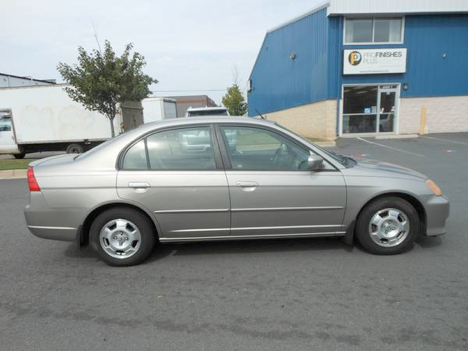

A car, not the newest model, but reliable and safe:  $18,670 with a minimum payment of $450.


Student loans totaling $2,360 with a minimum payment of $58.

Personal loan from grandparents for $150.  Minimum payments is $50.
Furniture Store credit card for $1350.  Minimum payment is $30.

New appliances with a $323 balance (you paid some cash).  Minimum payment is $8.



A new T.V. for $629.  Monthly minimum payment is $17.


Two more credit card debts:
$402 with a minimum payment of $12, and $435 with a minimum payment of $13.


Debt Snowball Plan (See Ensign July 2011)


The first step is to gather bills every place you owe money.  Place them in order from smallest debt to largest.  You do not need to look at the interest rate.  Make a table and write down the minimum monthly payment required for each bill.  Now, if you have a little extra money to put toward this debt, use it on the bill with the lowest balance.  You will pay all of the minimum payments and put your extra money toward the bill with the lowest balance.  Soon, that one will be paid off.  Then, you take that payment amount plus your extra and add that to your payment for the second bill.  When that one is paid off, use that same amount of money and put it toward the third bill.  This way, you pay the same every month, but your debt is decreasing ever more rapidly.


July 2011
Debt
Balance
Payment
Rate
Family Loan
$150
$50
0
Credit Card 1
$323
$8
17.9
Credit Card 2
$356
$8
24.9
Credit Card 3
$402
$12
19.9
Credit Card 4
$435
$13
18.9
Credit Card 5
$629
$17
14.9
Credit Card 6
$1350
$30
13.9
Student Loans
$2360
$58
4.7
Auto
$18,670
$450
7.5
Totals
$24,675
$646


October 2011 (3 months later)
Debt
Balance
Payment
Rate
Family Loan
$0
$0
0
Credit Card 1
$313.31
$58
17.9
Credit Card 2
$354.12
$8
24.9
Credit Card 3
$385.73
$12
19.9
Credit Card 4
$416.26
$13
18.9
Credit Card 5
$601.09
$17
14.9
Credit Card 6
$1306.41
$30
13.9
Student Loans
$2213.16
$58
4.7
Auto
$17,663.80
$450
7.5
Totals
$23,253.88
$646


April 2014 (33 months later)
Debt
Balance
Payment
Rate
Family Loan
$0
$0
0
Credit Card 1
$0
$0
0
Credit Card 2
$0
$0
0
Credit Card 3
$0
$0
0
Credit Card 4
$0
$0
0
Credit Card 5
$0
$0
0
Credit Card 6
$0
$0
0
Student Loans
$620.34
$196
4.7
Auto
$6496.26
$450
7.5
Totals
$23,253
$646


(supplement: Youtube explanation of the above scenarios: Debt Snowballing)

Getting Out of Debt—for Good,  By Luke V. Erickson, Personal and Family Finance Educator

I borrow this advice from Dave Ramsey, a well-known financial advisor.  He talks about taking baby steps.  I like his plan.  It is simple and you can see where you’re at and what comes next.


3. Baby Steps, Dave Ramsey
1. $1000 to start an emergency fund
2.  Pay off all debt using Debt Snowball (we will talk about this tonight)
3.  3-6 month's expenses in savings
4.  Invest 15% of household income in IRA and pre-tax retirement
5.  College funding for children (529 plans)
6.  Pay off home early
7.  Build wealth and give!


Of course, the ideal situation is to not get into debt.  Our church leaders have mentioned a very few instances where debt is justified:  A home, and an education.  They also mentioned perhaps an entrepreneurial business that has potential for financial stability.  There may be cases where a car would fit into this category as a means to get to work, but that is rarely mentioned, actually. . .


4.  Look for ways to save money---  How to get by on less? DISCUSS
A. Plan expenses (have a grocery list, don’t go when you are hungry, go without the kids--), coupons, learn where the best prices are (keep a notebook of “best prices”)
B. Research to buy large things (cheaper isn’t always better, sometimes/often pay more for a better quality product which will last longer is better)--Consumer Reports is very valuable.
C. Bargain (medical issue recently--paid cash and got 10% + a family discount knocked off the price), on anything over $100, “Is that your best price?”
D. Learn how to do things yourself by repairing and maintaining your belongings  (youtube is a huge blessing--you can learn how to make your sweaters look good again when they have pills of threads, or how to unclog a toilet, or how to repair a bike etc.),
E. Put limits on your purchases (one friend does most everything on a cash basis--when the money is gone, it is gone),
F. Pay off credit cards in full each month---don't put more on them than you can pay off in a month!
G.  Pay off your mortgage early:  Pay a little more than required EVERY month
H.  Keep a categorized record of what you spend.  Mint.com was recommended.


Play around with a calculator for adding extra money  ($1-$500 or whatever) to your monthly payment:


  1. Budget effectively so you can make mortgage payments of half the usual amount every two weeks instead of a full payment once a month, resulting in lower overall interest charges or the annual equivalent of an extra monthly payment or both. (Be sure to check first with your mortgage lender in case this payment program needs to be approved and set up by them.)               
  2. Make one extra mortgage payment every year.
  3. Add an extra amount to the principal of every mortgage payment.
  4. Agree to apply some extra or windfall income to the mortgage.
  5. If the benefits outweigh the cost of doing so, refinance for a lower interest rate or to reduce the number of years required for repayment.

Escaping the Debt Trap , By Janene Wolsey Baadsgaard, August 1996 Ensign


5. Lessons learned from financial independence
I subscribe to a magazine called “The American Music Teacher”  In the October/November issue, there was an article by a Kathryn Schmidt who found herself in a new city because her husband had just found a job and they had moved.  She did not have piano students, she didn’t have any contacts, she had a young child.


There are lots of reasons one might find himself/herself in a situation like this--for example, recently, the government shutdown, unemployment due to a variety of reasons,  perhaps illness, a new baby, a move, just graduating from college.


She had some tips for dealing with life with money is tight:
1.  Diversify and pursue new creative directions  (when she didn’t have students, she had more time for practicing herself, she learned to garden, and she said how much she appreciated her time with her son)
2.  There might be un-tapped resources in your neighborhood or community.  In Kathryn’s example, she found listeners at church.  There are assisted living centers with people who love visitors.
3.  Find what is energizing for you:  positive thinking, prayer, exercise, meeting neighbors, getting involved in the community, celebrating small accomplishments.
4.  Realize what you are learning.  Her list included the following:
A.  She is more grateful for what she has.
B.  She is more discerning of what she needs
C.  She takes better care of her belongings
D.  She chooses more wisely when she shops
E.  She and her husband became less materialistic
F.  They were more aware of gifts which don’t cost money.
G.  They were more creative on how to entertain themselves without spending so much
H.They learned how to be satisfied with gently used items.
I.  They are more resilient, more creative, more trusting.


Tuesday, October 15, 2013

Why I Am a member of The Church of Jesus Christ of Latter-Day Saints

Why I Am a Member of The Church of Jesus Christ of Latter-Day Saints

October 7, 2013 at 7:03pm
Ten Reasons I Belong to The Church of Jesus Christ of Latter-day Saints
Rene Johnson


1.  The doctrine is so purposeful about our eternal nature.  We lived with God before we came to earth, our purpose here on earth is to gain a body, learn and demonstrate obedience to God and return to Him.  We have a life after this one with purpose as well and I have the hope of seeing loved ones who have passed on from this life.  This doctrine has sustained me, made me feel valued, and given me reason for making the choices I have made throughout my life.  I feel like I know the path I need to walk along to return to God.

2.  The emphasis on families is a big reason I belong to The Church of Jesus Christ of Latter-day Saints. 

Temple marriages, where marriages are sealed for eternity, not just “until death do you part”, gives me a strong commitment to marriage: working things out, taking the long view, knowing that it is not a temporary commitment. 

The family emphasis also means that there is great support in the church for raising “good” children.  The Primary (ages 18 mo-11 years) and Youth Programs (ages 12-18)  are led by dedicated adults who care, spend time, teach, and lead our children.  The content of lessons presented through these programs are excellent and have really helped me (as a youth) and my children as they have grown up.  Teenagers also have daily early-morning scripture study classes during high school that gives them an excellent scriptural foundation. 

3.  I appreciate the opportunity to serve at church.  It is a lay ministry and everyone has an opportunity to serve.  For example, as an adult, I have had formal assignments as missionary (18 months in Honduras), visiting teacher (monthly visits to 2-3 sisters in the congregation ever since I was 18 years old), Sunday Relief Society teacher (2 years), Youth leader (1-2 years), Primary leader (5-6 years), Choir pianist (15 years), Organist (10 years), Scout leader (8-9 years), Relief Society Visiting Teaching Coordinator (2 years), Relief Society Presidency (2-3 years), Girl’s Camp leader (2 years).  Just about any active member of the church would have a similar list of service.  In addition, our local congregation provides many opportunities for service in the community.  Also, our church does a tremendous amount of global service.  (see mormon.org).  I have appreciated the opportunity for my children to serve as full-time missionaries too.  They dedicate two years of their lives at the age of 19 to share the gospel with others and serve their fellow men.  They put aside school, dating, social activities to really put God first.  It’s a great foundation for the rest of their lives.

4.  I belong to The Church of Jesus Christ of Latter-day Saints because I believe the church has the Priesthood of God.  Men who meet standards of worthiness are ordained to the priesthood and use the priesthood to direct the church and administer the ordinances of the gospel.  Blessings for the sick and for comfort are given by men holding the priesthood.  I am grateful for the priesthood.  I am grateful that my husband and sons take this responsibility very seriously in their lives and try to live worthy of it and bless others through the priesthood.  I feel personally blessed by the Priesthood of God.

5. I belong to The Church of Jesus Christ of Latter-day Saints because I feel great strength when I’m with members who are striving to be obedient to God’s commandments.  There is a brotherhood and sisterhood that is palpable when we share our feelings about the church and work together in our efforts to move forward according to God’s will.  This feeling happens even if I’m visiting a congregation outside my hometown.  I have experienced that feeling in Jerusalem, Jordan, Egypt, Honduras, Costa Rica, Peru, with a member in Tanzania. . .and all over the United States.  There is an instant bonding which is nothing short of miraculous.

6.  I belong to the Church of Jesus Christ of Latter-day Saints because I believe God still has a prophet and apostles on earth today, just as prophets were needed in biblical times.  I love listening to our prophet and apostles at our General World Conferences twice a year (April and October).  I believe in continued revelation and that God speaks to all people.  So, just as he spoke to the prophets in the old world (Bible), he also spoke to the people of the American Continent (the Book of Mormon).  And I believe that He continues to reveal His will to people of the world.  I believe the Bible and the Book of Mormon to be the word of God. 

7.  Personally, I feel that I am constantly taught how to be a better person--through scriptures and other written resources, through words I hear at church, through examples of people with whom I work.  I feel inspired and uplifted.  I feel like I have chances to repent, start over if needed, and continue progressing.  (This is not unique to the LDS church; I see this in other churches as well, but I wanted to note that I feel it too).

8. I belong to The Church of Jesus Christ of Latter-day Saints because I received the gift of the Holy Ghost when I was baptized (all members who are baptized receive the gift of the Holy Ghost by the laying on of hands by those with priesthood authority and have access to that gift as they live worthily).  I have been comforted, inspired, instructed, directed, received confirmations of truth, and protected by the Holy Ghost during my life.  It is a blessing that I value greatly.

9.  I feel formally watched out for and supported by visiting teachers (two women from church assigned to visit me each month), home teachers (two men who visit my family once a month), a bishop, a Relief Society President, Presidents of the children’s organization and the youth organization.

10. I belong to The Church of Jesus Christ of Latter-day Saints because it is a lifestyle that brings me a lot of happiness and hope.  We are a covenant people.  We make covenants with God at baptism and when we go to the Temple.  These covenants help to guide us in our lives.  In my travels, I have seen the gospel of Jesus Christ bless the lives of all types of people--the poor, the rich, the educated, the uneducated all over the world.  I wish all people could experience what I do as a member of this church.

Sunday, September 22, 2013

Tanzania Safari


In 2013, I went on a four-day Safari trip while we were in Africa.  My friend, Alesa and I went with Ilmaasai Company (ilmaasai@hotmail.com) which was located in Arusha, Tanzania.  We learned about them through a group of American service volunteers.  Loth is the owner and we worked with him to plan our trip.  Due to some scheduling changes, we ended up being available to go a day earlier than we had planned and he was able to accommodate us.  His driver, Bryson, picked us up from the Springland's Hotel in Moshi at 7:30 a.m. on Monday morning.

Three recommendations for a budget safari trip:
1.  Ilmaasai Company (ilmaasai@hotmail.com)
2.  Elimasai Tour Company (ngilasi@yahoo.com), 255.783.032.090
3.  Michael Medoth (micmedoth@gmail.com), 255-784-279-597, http://www.tanzaniamagictours.com/meet-magic-team/  also see Tanzania Magic Tours reviewed on trip advisor-- https://www.tripadvisor.com/Attraction_Review-g297913-d10341654-Reviews-Tanzania_Magic_Tours-Arusha_Arusha_Region.html

Later, while I was in Tanzania, I met another man who does tours.  It is the Elimasai Tour Company.  (ngilasi@yahoo.com)  Elia's phone number is 255.783.032.090.  If you contact him, please let him know that you got his contact information from Rene. He does the camping safari similar to what I describe below.  

I met Michael Medoth while I was in Tanzania too.  He owns/manages an orphanage in Arusha  (www.osiligiorhanage.org).  He is a very thoughtful, organized man and I'm sure would do a fine job of planning a safari trip.

Back to my experience:

We stopped by to pick up Ruth, who was also in Moshi.  She is Venezuelan and living in London.  She was in Tanzania for her great-aunt's funeral and to meet the nuns her aunt had lived with for many years.  She was a delightful young woman and a photographer.  Alesa and I were pretty happy that she was there and we look forward to seeing her pictures of things we saw too.

We drove to Arusha to get the rest of our group: a young, newly married couple from Poland, Paolo and Johanna.  They had been married for three weeks.  We met them at the office.  It was more like a shack, tucked back behind some buildings.  We had a dark green jeep with three rows of seats, a driver (Bryson) and a cook (Simon).  So, it was a fun group.  Soon, we departed in our jeep.  The top cover comes off and the 2nd and 3rd row passengers can stand up under a canopy to observe the safari animals.


We drove first to Terengeri National Park.  Along the way, we saw a lot of Massai people.  They wear very colorful clothing and wrap themselves in colorful cloths.  All the children carry a stick and most walk with herds of animals.  We saw a market with a hundred or so Massai people.


The Massai men wear blue when engaged, red when they are warriors; each color has a meaning.  Though to be honest, I saw lots of red and blue. . . so I felt that the definitions were maybe a little broad.  Bryson said that the Massai men don't do a lot; the women do everything (again, I hope that was just his opinion).

Apparently the Massai collect elephant dung, dry it and grind it into powder or milk it because the elephant eats all kinds of plants, it should be good medicine.

When the boys have white-painted faces, that signifies that they have just been circumcised and thus, become men.  Apparently the women cut off all their hair when they are circumcised.  We didn't see any bald women.


Arrow Soob WHY--Hello in Massai (Simon was part Massai, though contemporary and wore modern clothes, no jewelry, and his ears were like mine).

All along the road to Terengeri Park, there were speed bumps.  They seemed very unnecessary as the road had so many pot-holes, noone would go too fast anyway.

TERENGERI

We saw:  zebra herd, impala, ostrich, monkeys, baby zebra (mom killed by a lion), tsetse fly (I remember these from my college parasite class), elephants, wart hogs (they kneel to eat closer to grass roots which they like best), water buck, giraffe (photo 197 on camera), mating ostriches, eland (like impala with straight horns), wildebeast (they hang out with the zebras).


Our first night was at a campsite overlooking Manyara lake called Panorama campsite.  The tents were very small, about the size we had on Kilimanjaro, but Alesa and I shared a tent this time.  The bathrooms were not well maintained and we opted out of a shower (thank goodness for wet wipes for "some" sense of cleanliness.  Dinner was prepared by Simon and was good.  We explained to our group that we were Mormon and that we didn't drink even though they kindly offered us their beer and wine.  We contented ourselves with water.  After dinner, there were some "musicians"/acrobats.  They were definitely better at the acrobatics.  Here is a description of some of their antics:  They spun a bike wheel on their hand, hand, bottom of foot while turning over on the ground.  They juggled while putting one of the guys on the other's shoulders.  They jumped through hoops (bike rims).  They did feats of strength:  blocks on a table and three stacked.  Guys would do a hand stand, stack on thing end, move stack while hold body upside down and upright with one hand.  They finished by singing the jombo song.


NGORONGORO

We saw: herd of giraffes, jackal, crane, gazelles, warthog (run with their tails sticking straight up like an electric trolley) and wildebeest, zebra, heartbeast, hyena, lion, hippos, mating lions, baboon, cody bustard bird, ostrich (walk like they have high heels, cute eyelashes).


 Pawlo's brother had been to Ngorongoro a couple years before and mentioned this Crater Rim hotel.  Pawlo wanted to see it so, we somehow (thank you Bryson) managed to get a tour of one of the rooms.  It was, indeed beautiful.  They fly the roses in daily from Arusha.  We understood that the price was something like $1500/person/night.  I'm glad we got to see it though.

Then we went to our accomodations (below).


This was the kitchen where Simon prepared our food.  Each jeep had a cook and so each table represents a different jeep.  It was fun to watch them each coming up with a meal for their tourists.
Each table cloth represents a different jeep.  We ate at the red tablecloth.  We loved the popcorn. The meals always start with soup. 


Flat tire!  A little excitement.  Bryson and Simon changed it expertly.

SERENGETI

We saw: lions, giraffes eating acacia tree (their tongues are bluish and they don't seem to mind the thorns), impalas, many hippos in a pond, crane, hens with blue heads, tall birds with outspread white wings near hippos, leopard in a tree, baboons, elephants, yellow acacia, sausage tree, dikdik, 2 dead hippos, mongoose, yellow billed stork, topi.

Serengeti sunrise drive:  hyena, hippo out of water, monkeys mating, 10 monkeys in a tree (reminded me of Hats for Sale) pride of 5-6 lions, 3 cheetahs eating something, leopard eating in a tree, meerkats (dozen).

Bryson says you can tell a male from a female zebra by brilliance of white and black stripes?????


A leopard pulling a newly killed gazelle up into the tree.


Baby baboon riding on its mother's back.


Early morning hippo.


A pond full of hippos:  maybe 20.


Hyena.


Elephant droppings--to scale.


Serengeti sunrise.


Warthogs and zebras.


Warthogs kneel to eat the roots.


Weaver birds make nests. At the foot of this tree is a lion, which I didn't get a good picture of.  Alesa was almost close enough to grab its tail.  Fortunately, there were some branches between us and the lion.


Wildebeasts.   Interestingly, they often hang out with zebras.


Zebras crossing the street in front of our jeep.


Here are my swahili (swuh-HEE-lee) words from the Safari:

Twenday--Let's go
Simba--Lion
Twiga--Giraffe
Keyboko--hippo
Key FAR ru--Rhino
Chew ee--Leopard
Molgo--Water buffalo
Tembo--elephant
Kwa HAIR ee--goodby
Sowa-sowa--alright
Some uh HAW nee--excuse me
Habari ya ah su boo he--Good morning
Habari mchana--Good afternoon
Habari ya jee own knee--Good evening
Asante qua ku en daysh us vee zoo ree---Thank you for driving us so well.
Asante qua koo pee ka vee zoo ree---Thank you for making us such good food
cause ee me zoo re---good job
sofa sani--good job

The money is a shilling.  10,000 shilling is about $6.  The exchange rate was 1625 shillings to the dollar.

The second day, we dropped our stuff off at Simba Camp at Ngorongoro Crater.  It is rather rustic with a big field for tents.  The bathrooms have much to be desired.  I would definitely prefer a tree!!! Might just do that.

Lunch was bread and butter and shredded carrot, fried chicken, empanadas, hard-cooked-egg (still with the white yolk---I can't quite handle that combination), orange juice, muffin.  We ate lunch while watching about 6 hippos in the lake.  All the safari jeeps come to this place for lunch.  There were probably at least 50 jeeps.  However, once we get spread out in the crater, we only see a few at a time.


And Polish:
Jen QUEE uh--Thank you

Pawlo said to look up Kujawiak style music from Poland and the Mazowsze fold dance group.  He dances with a folk dance group there.

Day 3 at 8:48 a.m., we had a flat tire on the back left.  I got out and helped with some lug nuts.  Everyone else stayed in the car.  In retrospect, maybe I should have stayed in the car too, but I was feeling helpful.  We didn't seem to be close to any animals as we were still up on the ridge.  That may have been a false impression though. . .

We stayed at Nyani public campsite for Wednesday night in the Serengeti.  Both Alesa and I kind of sighed at the accomodations:  a dusty field for tents, a cooking pavilion, an eating pavilion for tourists.  The bathrooms were in better shape than the previous night, more squatty potties.  We both took advantage of the showers here.

Things I am craving:  ice, lettuce, anything dairy, JIF peanut butter.

The jeep drivers/guides have radios and share sightings with each other.  The Serengeti is divided into areas including:  Balloon area, Massai Kopjeks, Soronero River area (hippos), Villi ma Saba area (7 hills area), Moll Kopjeks (stone mountain), swai mountain.

Heading back to Arusha.  At 2:10, I'm watching the two diesel tanks on the jeep.  They're both empty.
Here's some of my math:

2152/1625 is the price of diesel.  We put in 18.50 liters in one tank for 40,000 shillings.  The jeep gets 7-8 km/liter.  That is 8 km(6 miles/10km) or 4.8 miles/liter(3.2 liters/gallon).  That is 15.36 miles/gallon in the jeep.  We put 20 liters in tank so we can go about 150-160 miles.  The last sign to Arusha a ways back was 156 miles.

The newlywed couple recommended their hotel to us since we didn't have arrangements for Arusha that night.  It was the Silver Palm Hotel, not too far from Ilmassai.  We were pleased and were given the same rate they were paying.  It was simple, but modern, clean and comfortable.  We had dinner.  I had a vegetarian curry, a nice shower, and a good night's sleep.

The next morning, we packed up and took our stuff by taxi to Michael's orphanage and met Melinda there.  They performed songs for us, braided my hair, shared their math with me.  I fell in love with them.  They sat on my lap, touched my hair, laughed with me.  We washed our hands and they gave us lunch, they played with my glasses.  The children all had lime green shirts on as their uniform.  Melinda shared with them The Kissing Hand story.  I had to step outside as it was way to emotional for me to watch her say goodby to those children she had been with for the past four months.  Michael and his wife Hidaya took us to the airport and we gave them the rest of our money including the money we had set aside for a taxi.  Hidaya is such a beautiful woman and carries herself like a queen.  She is kind, warm, and friendly as is her husband.


I left the braids in my hair for a week after I got home.  They brought back very special memories of this moment.


Little Robert fell asleep in my arms.  What a sweetie.


Michael and Hadiya


At the airport, we said goodby to Melinda, found out that we could not do standby.  So, we had 12 hours before our flight was scheduled.  We were $50 away from Arusha.  We decided to stay at the airport hotel, a bit of a splurge, but we were glad.  We were able to relax, have dinner, and get a few hours of sleep.

We were happy to get to the airport in the early morning.  I was called back to a back room to watch someone go through my luggage very thoroughly.  They questioned the hand warmers. . . but ultimately packed everything back up.  I slept all the way to Addis Ababa.  Then, we had another 12 hour layover there.

We had discussed going into town that day since we had all day-time hours there.  But, when we learned that the Visa was $20 (not that big of a deal) AND that we also had to have a hotel reservation ($70), we decided to pass the day at the airport.  We were in Terminal 2 this time (when we flew from Addis to Kilimanjaro, we had been in the dirty, run-down Terminal 1).  Terminal 2 was much nicer and had lounge chairs.  We camped out and I slept for a good part of the day.  We had a delicious lunch (spaghetti for me, chicken for Alesa), slept some more.  Alesa facetimed with her family.


Again, I slept almost the entire way back to the US.  George, Lana, Jeff (Lana's boyfriend), and Sam met us at the airport.  The had flowers for me and Alesa (so thoughtful!).  Once home, I hurried and showered and drove to church for the last of Sacrament meeting and the rest of church.  Alesa hadn't slept much on the plane and was pretty wiped out so she didn't go to church.

It was a great trip.  I loved the animals, the orphanage, the mountain, the people.

As an additional reference on rating safari trips:
http://travel.cnn.com/tanzania-voted-best-country-watch-african-animals-run-wild-182326